Plan your connection
- Phone
- 512-646-7387
- Email
- volunteer@austinhumanesociety.org
- Hours
- Volunteer access: Monday–Saturday 8am–7pm; Sunday 8am–5pm. Public adoptions begin at noon.
- Services
- Dog walking and cat socialization; education and adoption support. New clinic/community-cat volunteer intake is on hold.
- Requirements
- Registration, virtual orientation, online safety learning and two-hour hands-on training. Commit two hours weekly for at least three months.
- Cost
- One-time registration: $35 adults; $20 students and seniors.
- Age requirements
- 14+. Ages 14–15 need a parent or guardian over 21 to train and volunteer with them. Ages 16–17 need parental consent.
- What to bring
- Long pants, closed-toe shoes and a shirt with sleeves.
service locationAustin Humane Society shelter
124 W. Anderson Lane, Austin, TX 78752
512-646-7387
Public adoption hours and volunteer access hours differ; complete onboarding before a volunteer shift.
The work in practice
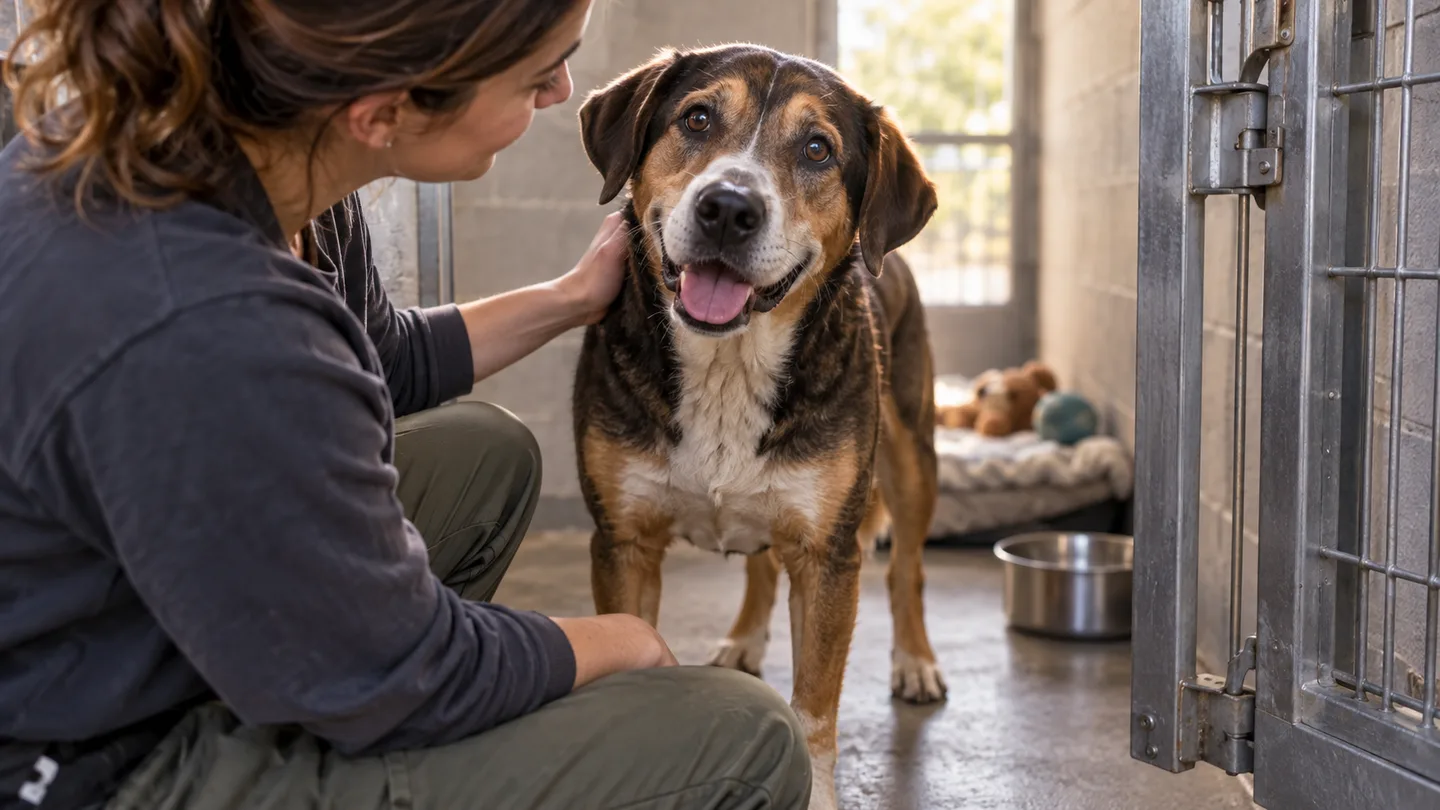
Austin Humane Society volunteers help care for shelter dogs and cats through activities including dog walking and cat socialization. Joining begins with registration, orientation, online learning and hands-on training. Volunteers then take scheduled shifts, committing two hours each week for at least three months. That repeated contact makes participation part of the shelter’s regular care rather than a single visit. People interested in caring for an animal at home can explore the separate foster route, which involves matching a caregiver with an animal and agreeing on the temporary arrangement. Both routes connect people with the practical responsibility of animal care.
Why this work matters
A pet can be part of a household's deepest sense of home. When care becomes difficult, the problem may involve money, housing, transportation, or access to suitable help rather than a lack of affection. At the same time, affection alone cannot meet every animal's needs. Humane decisions require attention to safety, appropriate care, and the limits of the situation. Supporting animal welfare means holding these realities together: respecting the people involved while keeping the animal's well-being central. It also means avoiding easy judgments about families in difficulty or assuming that the most emotionally compelling story always points to the most appropriate response.
Austin discovery connection from the official provider. Exact program eligibility and locations remain separate.